
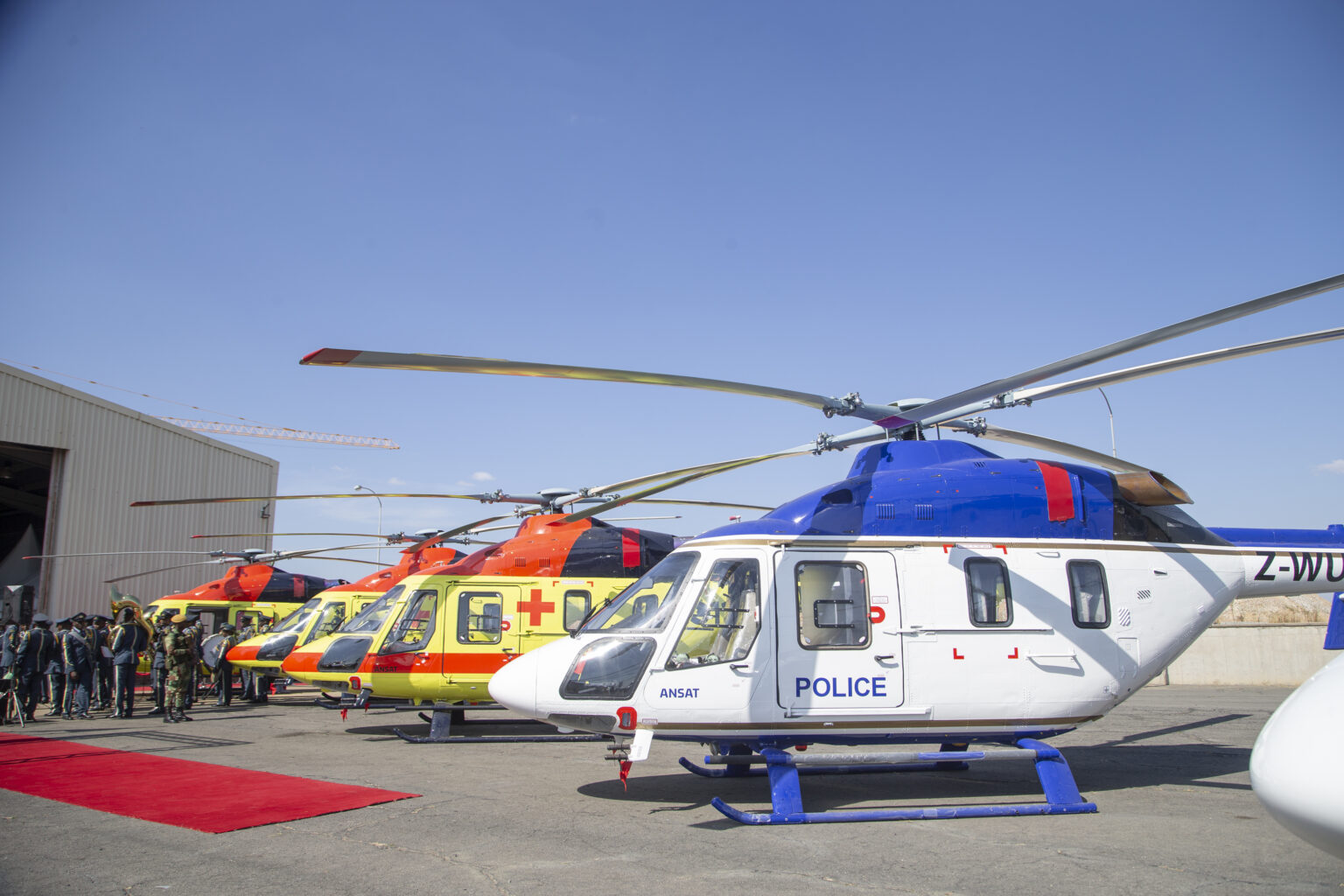
In a move that has ignited widespread debate and criticism, the Government of Zimbabwe recently commissioned a fleet of helicopters from Russian manufacturer Kazan. Intended for various purposes, including air policing and search and rescue operations during natural disasters, the helicopters were acquired through a private-public partnership with Russian firm Russian State Corporation (Rostec). However, the acquisition has raised eyebrows due to concerns over-inflated costs, donation claims, and the feasibility of maintaining these helicopters in a country grappling with economic challenges and sanctions. As Zimbabwean citizens express their dismay on social media, the controversial deal has highlighted the issue of misplaced priorities in a nation where basic healthcare and infrastructure needs remain unmet.
Under the leadership of the ruling party ZANU-PF, the Zimbabwean government declared the purchase of 32 Kazan Ansat helicopters for a staggering USD 320 million, averaging at USD 10 million per unit. However, this astronomical figure has been met with skepticism and sparked heated discussions. Critics argue that a brand new Kazan Ansat helicopter typically costs only $2.5 million, leading to suspicions about potential mismanagement or corruption surrounding the deal.
Adding to the controversy, various sources, including Russian newspapers, have claimed that the helicopters were actually donated, further deepening the uncertainty surrounding the transaction. These claims have only fueled suspicions of a murky agreement, casting doubt on the transparency and integrity of the deal between Zimbabwe and the Russian State Corporation.
Beyond the concerns regarding the acquisition costs, maintaining the Kazan Ansat helicopters poses a significant challenge for Zimbabwe. Both Russia and Zimbabwe are subject to international sanctions, which severely restrict their ability to access spare parts and technical support for these Pratt & Whitney-powered helicopters. This situation raises serious doubts about the long-term viability and sustainability of the fleet.
In the wake of this controversial helicopter acquisition, Zimbabwean citizens have taken to social media platforms to voice their frustrations and concerns over what they perceive as misplaced priorities. The outcry stems from the stark contrast between the exorbitant expenditure on helicopters and the dire state of essential services in the country.
One of the most pressing issues raised by citizens is the inadequate state of healthcare facilities. Hospitals struggle with a lack of basic equipment and essential medication, such as even something as fundamental as paracetamol. The absence of sufficient ambulances exacerbates the healthcare crisis, making it difficult for emergency services to respond promptly to medical emergencies.
Moreover, Zimbabwe’s struggling infrastructure and limited access to transportation have left many communities isolated, especially during times of natural disasters like cyclones. While the newly acquired helicopters may have the potential to aid in search and rescue operations, citizens argue that prioritizing the purchase of helicopters over addressing these fundamental needs reflects a grave misallocation of resources.
Discover more from Africa Aviation News
Subscribe to get the latest posts sent to your email.
 Africa Aviation News